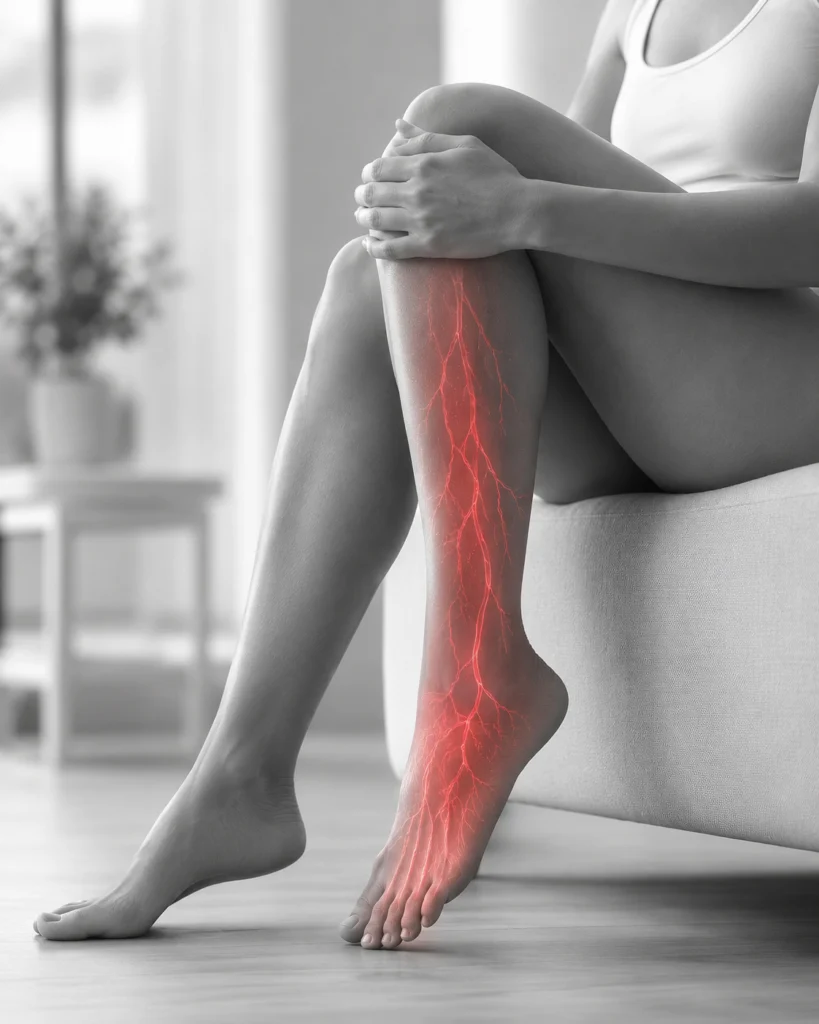
Evaluation for visible veins, leg symptoms, and signs of vein disease
Vein Conditions
Understanding Vein-Related Symptoms
Vein disease can appear in different ways. Some patients notice visible veins, while others experience leg heaviness, aching, swelling, skin discoloration, or slow-healing wounds near the lower legs or ankles.
Not every visible vein is medically serious, and not every leg symptom is caused by vein disease. A proper evaluation helps determine whether your symptoms may be related to circulation problems and what care path may be appropriate.
If symptoms are persistent, worsening, or affecting daily comfort, a consultation can help clarify the next step.
Vein Conditions We Evaluate
Common vein-related concerns may include visible veins, leg discomfort, swelling, and skin changes.
Varicose Veins
Large, twisted, or bulging veins that may cause aching, heaviness, throbbing, or visible leg changes.
Spider Veins
Small visible veins that may appear as fine red, blue, or purple lines on the skin.
Leg Swelling
Swelling in the legs or ankles may be associated with circulation issues and should be evaluated if persistent or worsening.
Leg Heaviness or Aching
A heavy, tired, or aching feeling in the legs may be related to vein problems, especially when symptoms worsen after standing.
Skin Discoloration
Darkening or discoloration around the lower legs or ankles can sometimes be associated with chronic vein disease.
Venous Ulcers
Slow-healing wounds near the lower legs or ankles may require medical evaluation and appropriate management.
How We Evaluate Vein Concerns
Evaluation helps determine whether your symptoms may be related to vein disease and whether treatment may be medically appropriate.
Symptom Review
We review your symptoms, medical history, lifestyle factors, and how your concerns affect daily comfort.
Physical Examination
The provider may evaluate visible veins, swelling, skin changes, and other signs that may suggest vein disease.
Care Planning
If additional evaluation or treatment is appropriate, the next steps will be explained clearly before moving forward.
Insurance & Self-Pay Options
Coverage for vein-related evaluation or treatment may depend on your insurance plan, symptoms, medical necessity, diagnostic findings, and prior authorization requirements.
Our team can review your insurance information and help determine whether your concern may be eligible for insurance-based evaluation or treatment.
Urgent Symptoms
Sudden leg swelling, severe pain, chest pain, shortness of breath, or symptoms concerning for a blood clot should be treated as urgent and require immediate medical attention.
Concerned About Vein Symptoms?
Schedule a consultation to discuss your symptoms and learn whether further vein evaluation may be appropriate.